🏈 The NFL Takes Paris: The”Swiftynomics” Taylor Swift Strategy
Taylor Swift, the NFL, and America’s Latest Power Move — Paris
When Taylor Swift started showing up in a Kelce jersey at Arrowhead Stadium in the fall of 2023, most people thought it was just a celebrity love story. It turned out to be a masterclass in global sports marketing. Swift’s presence boosted the NFL’s female audience viewership by a staggering +63% — and the league didn’t just stumble into that. It engineered it.
Now, that same marketing intelligence is pointed at an even bigger target: Europe. And more specifically, Paris.
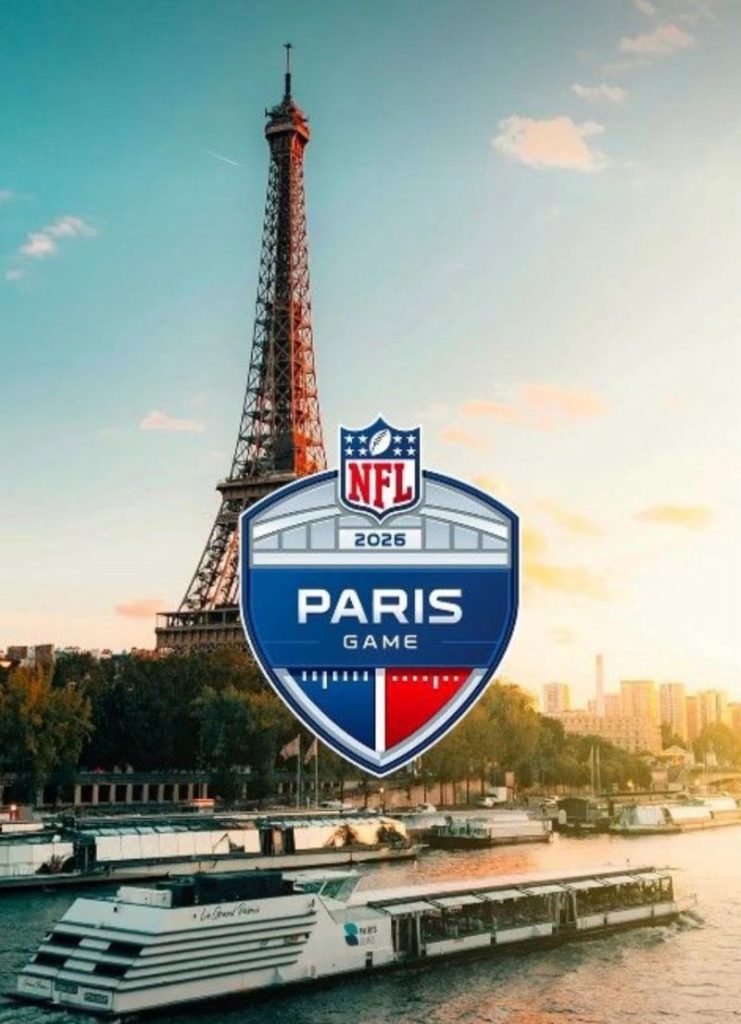
In October 2026, the New Orleans Saints will face the Cleveland Browns at the Stade de France — an 80,000-seat iconic national stadium just north of Paris — in the first-ever NFL regular-season game played on French soil. Behind the spectacle lies a ruthlessly data-driven, brilliantly executed strategy targeting 14 million French football fans and laying the groundwork for what could become a permanent NFL European division.
This is not just a game. This is American soft power at its finest — and it’s a playbook every business leader should study.
Why Paris? Why Now?
The Paris announcement didn’t come out of nowhere. It’s the culmination of a patient, multi-year international expansion built brick by brick since the NFL’s first London games in the mid-2000s. After the 2024 Paris Olympics electrified the world with France’s ability to host a truly global mega-event — drawing over 10 billion viewers worldwide — the NFL took notice. Paris had proven itself as the planet’s ultimate stage. The NFL wanted in.
On October 25, 2026, before more than 80,000 fans at the Stade de France and millions of viewers worldwide, the NFL will make history in the most iconic city on Earth. This isn’t a coincidence — it’s the closing act of the most sophisticated sports expansion strategy of our era.
The NFL’s Dominant Business Model: A Quick Primer
For any non-American reader — or for Americans who take it for granted — here’s the economic engine that makes NFL global expansion possible in the first place:
The NFL generated over $18 billion in annual revenue in 2024, making it the most lucrative sports league on the planet — ahead of the Premier League, the NBA, and the MLB.
Key pillars of the model:
Positioning: Absolute dominance of the American sports market, with network TV and streaming rights as the financial backbone.
Multi-generational segmentation: Specific campaigns for Gen Z, families, and local communities.
Fan Experience: The NFL App, NFL RedZone, exclusive digital content, and immersive live events like the Super Bowl Experience.
Partnerships: Massive deals with PepsiCo, Verizon, Nike, and Amazon (Thursday Night Football).
The American Laboratory: Engineering Scarcity and Profit
Before it could export its model to Europe, the NFL built an unrivaled domestic economic fortress — one based on a fascinating paradox: fierce capitalism governed by near-socialist rules between team owners.
The Franchise Model and Financial Equity
Unlike European soccer leagues — where clubs can be relegated to a lower division based on performance, threatening economic ruin — the NFL is a closed league of 32 franchises. No one gets relegated. No one gets kicked out of the club.
Revenue Sharing: Those colossal national TV rights contracts — totaling over $110 billion across 11 years with CBS, NBC, Fox, ESPN, and Amazon — are split equally among all 32 teams. The Green Bay Packers, playing in a small Wisconsin city of 100,000 people, receive the exact same share as the New York Giants playing in the nation’s media capital. That’s by design.
The Salary Cap: By capping team spending (set at over $255 million per team for the 2024 season), the league guarantees competitive parity. Every team can mathematically rebuild and contend for a championship within 3 to 5 years. The Cleveland Browns and the Kansas City Chiefs are, on paper, playing the same economic game.
This engineering keeps hope alive for every fan base — which maximizes Customer Lifetime Value (CLV) and keeps audiences loyal year after year. It’s not just good sportsmanship. It’s smart business.
The Franchise System: 32 Brands, One League
The NFL isn’t a traditional “club championship” in the European sense. It’s a cartel of franchises that share massive national revenue while each building distinct local identities:
American pride (the Dallas Cowboys, self-styled “America’s Team”)
Industrial heritage (the Pittsburgh Steelers and their steel town roots)
Cultural identity (the New Orleans Saints, deeply rooted in Louisiana’s Creole culture — and, as we’ll see, perfectly positioned for Paris)
Each franchise operates as an autonomous marketing entity: managing its own brand, building its own communities, driving its own merchandising deals and local partnerships. The league provides the regulatory framework, the TV contracts, and the institutional firepower.
Merchandising: The Fan’s Closet as a Media Channel
Every item is simultaneously a revenue stream and a loyalty signal. A Saints jersey worn on the streets of Paris or a Chiefs hoodie spotted at a Berlin café isn’t just apparel — it’s a statement of global cultural identity that transcends the sport itself. When a French teenager wears a Mahomes jersey, they’re not just a fan. They’re a brand ambassador.
The NFL’s revenue streams are strategically diversified:
Media rights (linear TV + streaming) — the primary foundation
Global sponsorship (naming rights, official partners, multi-platform activations)
Local franchise sponsorship (regional banks, telecom providers, retailers)
Digital platforms and proprietary content
Brands flock to the NFL for three key reasons: massive reach, data-driven targeting, and high-emotion contexts (playoff games, the Super Bowl, halftime shows).
The Super Bowl and Pop Culture: American Soft Power at Scale
Here’s where the NFL’s strategy gets genuinely brilliant — and globally disruptive.
The league figured out early that sport alone isn’t enough to dominate the global attention economy. You have to inject entertainment industry DNA into the DNA of the game itself.
The Halftime Show: The Ultimate Conversion Weapon
The Super Bowl is the last true mass TV event capable of drawing over 120 million simultaneous viewers in the United States alone — a number that virtually no other broadcast can match in the streaming age. Brands pay $7 million for 30 seconds of airtime (per AdAge), turning commercial breaks into cultural events in their own right.
But it’s the Halftime Show that serves as the NFL’s international Trojan horse.
In 2022, the show featuring Dr. Dre, Snoop Dogg, Eminem, Mary J. Blige, and Kendrick Lamar was essentially a love letter to hip-hop culture — generating billions of social media impressions worldwide. Millions of viewers who couldn’t tell you what a first down is tuned in because of the music. The NFL uses pop culture to convert audiences who don’t yet know the rules of the game.
Artists, DJs, and Celebrities as Amplifiers
The strategy extends far beyond Taylor Swift:
The Dr. Dre, Kendrick Lamar, and Snoop Dogg shows cemented hip-hop at the center of the NFL cultural universe — a move that resonates deeply with urban audiences from London to Lagos to Lyon.
Artists and DJs with strong European followings — including DJ Snake, one of the biggest names in French electronic music and a major cultural bridge between Paris and the NFL universe — are increasingly integrated into matchday fan experiences, turning stadiums into global entertainment arenas.
Celebrities from film, music, and social media transform every major game into a high-fashion social event — content in its own right, infinitely shareable, borderless.
The strategy is explicit and unapologetic: make the game a pretext for a cultural moment, not the other way around.
“Swiftonomics”: The Taylor Swift Case Study
The fall of 2023 marked a marketing inflection point that was partly accidental and entirely masterfully executed.
When Taylor Swift — the most commercially powerful artist on the planet — started appearing in the Arrowhead Stadium suites to support her boyfriend, tight end Travis Kelce of the Kansas City Chiefs, the NFL didn’t just get a celebrity cameo. It got a demographic earthquake.
Financial Impact: Marketing agency Apex Marketing Group estimated that Swift’s presence generated $331.5 million in equivalent brand value for the Chiefs and the NFL within just a few months.
Audience Acquisition: Viewership surged by +53% among young women aged 12–17 — a demographic the NFL had long struggled to convert.
The Marketing Lesson: The NFL didn’t manufacture the partnership. It didn’t engineer a fake relationship or pay for a celebrity endorsement. It organically integrated Taylor Swift into its narrative — cameras strategically placed, TikTok content embraced, social media amplification leaned into — demonstrating a rare agility for an institution of this size and age. This is the perfect intersection of the sports business world and the global influence industry. And it worked on both sides of the Atlantic.
The Global Markets Program: Decentralize to Conquer
Until 2022, NFL international expansion was managed centrally from its New York headquarters — a top-down approach that produced decent results but lacked the local authenticity needed to truly penetrate new markets.
The NFL began distributing territorial marketing rights to its own franchises, empowering them to operate like independent startups in defined foreign markets.
The Glocalization Blueprint
Think global, act local. Teams invest directly in their assigned countries. They translate content into local languages, collaborate with local influencers from the streetwear and music scenes, and sign regional sponsors. The result: NFL expansion with genuine local roots, not just parachuted American content.
The Strategic Territorial Split:
🇬🇧 United Kingdom: The historic stronghold of the Jacksonville Jaguars, who have been the anchor of London NFL games for over a decade.
🇩🇪 Germany: Dominated by the Kansas City Chiefs and the New England Patriots, riding Germany’s surprising but powerful football culture.
🇪🇸 Spain: Targeted by the Miami Dolphins and the Chicago Bears — a calculated cultural bridge to Latin America and a rapidly growing Spanish market.
🇫🇷 France: Assigned to the New Orleans Saints — a stroke of genius. The Saints carry Louisiana’s French-Creole heritage in their very identity. The fleur-de-lis on their helmets. The French Quarter. The Mardi Gras. When the Saints come marching into Paris, it’s not a foreign brand landing in a foreign city. It’s a homecoming.
Tools and Tactics Deployed Internationally
Live Events: Regular-season games in London, Munich, Mexico City, Madrid, Dublin, Berlin, and Melbourne (announced for 2026)
NFL Flag Football: Grassroots youth development program — the gateway drug to NFL fandom, and now an Olympic sport starting in Los Angeles 2028
Brand Ambassadors: Former players, local influencers, and partnerships with national sports federations
Localized Content: Multilingual digital platforms, locally-targeted social campaigns
Licensing & Merchandising: Products adapted to local tastes, collaborations with European fashion and streetwear brands
The Timeline of the European Invasion: From London to Paris
The NFL’s European strategy has unfolded in deliberate, carefully sequenced phases — and it’s worth tracing the arc to understand why Paris in 2026 is such a momentous milestone.
Phase 1 – Incubation (London, 2007–present): Over 15 years of games at Wembley Stadium, culminating in a structural partnership with Tottenham Hotspur Stadium — a venue specifically engineered with a retractable synthetic turf field designed exclusively to host NFL games. London is now the NFL’s most mature international market, with multiple games per season and growing season-ticket equivalents.
Phase 2 – The Explosion (Germany, 2022–2023): The move into Munich (2022) and Frankfurt (2023) shattered expectations. Tickets sold out in minutes. The Continental market was ready — not just willing — for NFL-level consumption. Germany proved that the appetite wasn’t a London anomaly.
Phase 3 – The Latin Bridge (Madrid, 2025): The extraordinary success of the game at the Santiago Bernabéu — Real Madrid’s legendary stadium — demonstrated the NFL’s ability to partner with the world’s most iconic sports brands for a co-branding event of unparalleled prestige. The Real Madrid–NFL crossover generated massive global buzz and legitimized the league’s European ambitions at the highest possible level.
Phase 4 – The Consecration (Paris, 2026): The announcement of October 25, 2026 at the Stade de France. France now counts over 5 million NFL fans (Source: NFL International), supported by growing broadcast coverage on M6/W9 and BeIN Sports, and a deep integration of NFL aesthetics — New Era caps, team jerseys — into French urban street culture. With DJ Snake as a cultural bridge and the Saints as the perfect franchise ambassador, the NFL’s French chapter is ready to be written.
🏆 NFL Paris 2026: When America Meets France at the Heart of the Game
📍 Making history is the whole point.
It’s official. On October 25, 2026, the Stade de France — France’s 80,000-seat national stadium in the northern Paris suburb of Saint-Denis, the same arena that has hosted World Cup finals and European Championship matches — will host something it has never seen before: the New Orleans Saints vs. the Cleveland Browns in the first-ever NFL regular-season game played on French soil.
And this is much more than a game. This is a game-changing strategy.
“Louisiana Reconnects with Its French Roots — 3,700 Miles from New Orleans”
The Saints in Paris is not a marketing coincidence. It’s a cultural symbiosis. The franchise holds exclusive NFL marketing rights in France, while the city of New Orleans carries French DNA in its very name, its cuisine, its music, its architecture, and its soul. Thousands of Louisianans still speak a form of French Creole. The fleur-de-lis on the Saints’ helmets has been a Parisian symbol for centuries.
When the Who Dat Nation lands at Charles de Gaulle Airport and marches down the Champs-Élysées, this won’t feel like an American invasion. It will feel like a reunion.
“80,000 Fans. €100–150 Million in Economic Impact. One Market Unleashed.”
For context: the Madrid game in 2025 generated over €70 million in economic impact for the Spanish capital. Paris is the most visited city on Earth, the undisputed capital of European tourism, luxury, and culture. The economic ripple effect of NFL Paris 2026 is expected to surpass anything seen in the league’s international history.
The Paris Impact: Short, Medium, and Long-Term Projections
Short Term (2026)
Ticketing: Full sellout expected at premium pricing — demand will far exceed supply
Economic Impact: Estimated €100–150 million for the greater Paris region (hotels, restaurants, transportation, retail)
TV Audience: Over 2 million viewers in France alone, multiplied by worldwide broadcast
Social Media: Viral campaign anticipated around #NFLParis2026 and #MakingHistory
Medium Term (2026–2027)
Normalization: A second French game as early as 2027 or 2028 is already being discussed
Fandom Infrastructure: Organized fan clubs, watch party ecosystems, structured fan experiences
Sports Ecosystem: Reinforced partnerships with the French American Football Federation (FFFA), youth flag football development
Investment: Potential creation of a permanent NFL operational presence in France
Long Term (2028+)
Franco-European Franchise: Serious discussions around an integrated European division, with potential franchises in Paris, London, Berlin, and Munich
Hybrid Model: Drawing inspiration from the NBA Europe model, potentially combining a European NFL league with local development clubs
Revenue: Potential €3–5 billion/year in European TV rights, sponsorships, and merchandising for the continent
The 2030 Horizon: A Permanent European Division?
Paris 2026 is not a destination — it’s a proof of concept.
NFL Commissioner Roger Goodell has stopped being coy about the end game: a Permanent European Division by 2028–2032. That would mean 4 European franchises playing a full NFL season on European soil — most likely distributed between London, Germany, Spain, and France.
This unprecedented logistical and financial undertaking could generate between $3–5 billion in additional annual revenue for the league (Source: Ipanovia Projections & SportBusiness Journal) — transforming the NFL from America’s sport into the world’s sport.
The NFL has watched the Premier League become a global media product. It has watched Formula 1 explode in America after the Netflix Drive to Survive effect. It knows what globalization of a sports league looks like. And it is now executing its own version — with more resources, more data, and more entertainment firepower than any other sports organization in history.
💡 The Ipanovia Takeaway: Three Lessons for Your Business
What the NFL is achieving in Europe is not a sports story. It’s a strategic expansion manual applicable to tech, retail, consumer goods, and services. Here are the three pillars every executive should internalize:
1. Don’t sell a product — export a lifestyle.
The NFL doesn’t ask European fans to immediately understand the intricacies of a third-and-long conversion. It first sells them the music of Snoop Dogg, the glamour of Taylor Swift, the aesthetic of a varsity jacket. The product (the game itself) comes last — once you’re already captivated by the universe. Build the culture before you sell the product.
2. Decentralize your P&L.
The Global Markets Program proves that distributing financial and marketing responsibility to decentralized units (the franchises) is far more effective than directing everything from headquarters in New York. Local teams with local accountability drive local results. This is the antidote to the “one-size-fits-all” global strategy that so many companies still cling to.
3. Find your cultural anchor.
Saints in Paris. Dolphins in Madrid. Every successful international expansion requires identifying an authentic cultural echo — historical, linguistic, or lifestyle-based — that makes your arrival feel legitimate rather than invasive. The absence of that anchor is why so many American brands have stumbled in Europe. The presence of it is why the Saints’ landing in Paris will feel like a celebration.
Conclusion: Sports Marketing as the Laboratory of Globalization
The NFL’s international expansion — along with that of the NBA — illustrates a profound shift: sports marketing has become the innovation laboratory for all industries.
From AI-driven personalization and data-powered fan engagement to immersive live events, localized content strategies, and community-first brand building, the NFL is redefining the standards of what global market entry looks like. These aren’t sports business tricks. They are the new rules of international growth.
On October 25, 2026, when the Saints and the Browns run out of the tunnel at the Stade de France — under the roar of 80,000 fans in the shadow of the Eiffel Tower, in the city that has defined world culture for three centuries — it will be more than a spectacle.
It will be the culmination of the most brilliantly executed market conquest of our time.
About Emmanuel Facovi the Founder and Managing Partner
Experienced multicultural manager with a passion for new technologies, innovation, disruptive models and, above all, international business. Emmanuel Facovi is Ipanovia Founder and Managing Partner . he is an expert in Digital, Data, Marketing Strategies and Saas/Tech solutions with over 25 operational roles in 12 countries on 3 continents.
An economist and legal consultant, Svetlana Facovi has international operational experience of the legal and administrative aspects of business development in new markets. She has worked for top consultancies and major international groups in Europe.
Ipanovia, Your Trusted Consulting Partner for Global Expansion and Liaison Office in Paris
For more info or advice , please Contact us at contact@ipanovia.com , on our Linkedin page .
If you are interested in the business of sports, you may also like our pieces on sports marketing, the Paris 2024 Olympic Games, and Gen Zand new fan behaviors.
About Ipanovia
Ipanovia designs and implements your international growth strategy. We help you accelerate your business beyond domestic borders, across more than 20 countries in Europe, APAC, and the Americas.
The digital transformation is forcing companies to rethink how they grow and expand internationally. Having a strong presence on the global playing field is now essential to remain competitive.
Cutting‑edge technology, product–market fit, advanced business intelligence, digital solutions, and deep market knowledge enable us to scale your development plans with impact.
Our experience in launching and managing operations in Europe, North and South America, and Asia is a key success factor when approaching these markets. We bring together the best experts and solutions to support your international expansion. Based in Paris, we represent your interests in France and across Europe as your local liaison office.
Our international support model also focuses on coaching and empowering leaders, helping the people in charge to navigate complexity, manage risk, and seize new opportunities abroad.



 Emmanuel Facovi ,Founder & Managing Partner